


Fewer than five years had passed since my father’s return from the war in the Pacific, where at one point his base had been bombed nightly, when I was born.
Fewer than five months before my birth, American forces were thrown into another war, one on the Korean Peninsula. On the day I was born, US military and intelligence officials were assuring President Truman that China would not enter that war. In fact, Chinese divisions had already crossed into Korea and were heading south to encounter US forces.
When I was a high school freshman, President Johnson told the nation that North Vietnamese patrol boats had fired on US Navy destroyers (they probably had not) and, therefore, the US would bomb the North and send additional forces to South Vietnam. My senior year in high school, with by then a half million US troops fighting the war in Vietnam, during the Tet holiday, those US forces and their South Vietnamese allies were hard-pressed by a surprise enemy offensive that swept through the major cities. Support for the war began to turn.
My college experience was played out against a backdrop of Johnson and then President Nixon throwing more and more US forces into a war that an ever-increasing number of Americans opposed, a war of shocking brutality and ever-escalating lethality. During one period, a thousand Americans were killed a month. For me and many of my fellow students, the sword of Damocles in the form of the Selective Service Draft hung over our heads as a potential graduation present. Little wonder that hundreds of thousands of us, and other citizens, protested repeatedly in the streets of Washington and other cities, asking “what are we fighting for?”
In retrospect, we came to understand that the Vietnamese were highly motivated by nationalism and anti-colonialism, a desire to unite the two parts of Vietnam into one nation. They were resilient and ingenious and outsmarted the technology and brute force firepower of America. Lyndon Johnson, whose domestic policies were laudable and courageous, feared the prospect of being labeled a president who had lost a war. He also felt an inadequacy around the “egghead” experts he inherited when his predecessor was assassinated, experts who urged him to continue and expand the war. Although skeptical of the US military’s leadership, he repeatedly succumbed to their entreaties that if only we would do a little more, we could win. Finally, he left office rather than run for re-election. Anti-war sentiment led to widespread disorder in the US.
Richard Nixon thought a combination of Machiavellian diplomacy and massive bombing could provide him with cover for a graceful exit from the war, keeping our allied government in charge in the South for “a decent interval.” The Vietnamese’s political and military acumen defeated him and that, no doubt, contributed to his mental breakdown, alcoholism, and near impeachment.
As an anti-war student protester and then as a very young Pentagon civilian analyst, I watched the Vietnam War play out in detail, daily, for years. That experience led me to work on arms control in Europe and later on security arrangements in the Arabian/Persian Gulf. I was motivated to help our nation’s leaders avoid war, or at least misguided wars conceived and carried out on the basis of poor analysis, jingoism, and machismo.
America was so traumatized by the Vietnam experience that it shied away from major conflict for fifteen years, a seemingly short period by some standards, but the longest period of major noncombatant activity we had since 1942. (It remains the longest interval since 1942.) Then, in 1990, when Iraq quickly invaded and absorbed Kuwait, President George H.W. Bush, a World War II combat veteran, called upon America and the world to reject that violation of international norms and force Iraq to withdraw. When they refused, Bush ordered a large US force to lead a multinational coalition into war with Iraq. Some in Washington spoke of overcoming the “Vietnam syndrome” and proving that the US was still willing to fight and knew how to win.
I was in 1990 the Assistant Secretary of State for Politico-Military Affairs and was at the epicenter of much of the war, from the meeting with Saudi King Fahd that authorized US forces to deploy, to meetings with US commanders on airstrips, desert encampments, and headquarters spread out across the region, to briefing the North Atlantic Council, to negotiating with Gulf state leaders. It was exhilarating and, I believed then and now, the right thing for America to do.
What is now thought of as the First Gulf War (of three) was fought with Congressional approval, UN authorization, and a coalition of over fifty nations who fought alongside us and/or picked up much of the financial cost of our operations. The US had clearly defined, limited, and achievable objectives. There were few US fatalities, and the US military demonstrated skills, technologies, and mass that amazed analysts around the world (notably in Beijing). When the returning forces marched through the streets of Washington, they did so to near universal acclamation. It had been “a good war,” and I was proud to have played a role in it.
A decade later, following the terrorist attacks on America, I was also in the “room where it happened” for key war decisions, this time as Special Assistant to the President (NSC). In the room, but not influential enough to be heeded, I watched what should have been a limited operation in Afghanistan morph into an occupation. Worse yet, I saw the plans unfold for a war in Iraq (Gulf War II), justified in part by the terrorist attacks in which Iraq had played no role. Decisions on both Afghanistan and Iraq were taken with little or no objective analysis, fueled by ideology, politics, and machismo. The war on Iraq had been a war of choice, the choice of the US President, a man who always seemed to me to be suffering from imposter syndrome and being led about by ideologues posing as experts.
I left government and wrote a book, a number one national best seller, opposing the Iraq War at a time when it still had overwhelming popular approval in the polls. I repeatedly did the circuit of television shows and spoke on campuses and in auditoriums around the country opposing the Iraq War. The war became a bloody insurgency overseen by non-expert civilian ideologues. Two years later, with the majority of Americans believing the war had been a mistake, the President’s party was handed an historic defeat in Congressional elections, following which he fired the Secretary of Defense. It had been a bad war, a folly of immense proportions that destabilized a large region of the world for over a decade. Estimates of the financial cost exceeded a trillion dollars. Civilian and military deaths were reported between two hundred thousand and a million.
It seemed inconceivable that we would repeat that kind of spectacular disaster, but our period of noncombat was short. Four years after the last US troops ignominiously decamped from Afghanistan (the withdrawal being another example of a massively incompetently managed operation), we are at war again, Gulf War III.
For over forty years, US presidents had considered major military action against Iran. (I and one other White House official had once sat alone with the Chairman of the Joint Chiefs of Staff in his office as he outlined why any such war would have no acceptable end game.) They had all rejected it, upon detailed analysis of the likely outcomes. As Lincoln said in his Second Inaugural, “all dreaded it, all sought to avoid it….and the war came.”
This time an American president went to war not only without analysis, but without clear objectives, any discernible strategy, Congressional authorization, or international coalition. Five weeks into the war, it has enriched Russia, given control of a key global waterway to our opponent, alienated our European and Asia-Pacific allies, and replaced the leadership of our opponent with a set of hardline commanders. Almost any Gulf security expert at any think tank or campus would have predicted, as the JSC Chairman had to me years earlier, that there is for the US no good ending to such a war. And as of this writing, the President seems desperate to find a way out of the war he started, his war of choice.
History will record how this war was the product of a presidency in which the leader suffered from massive and unjustified overconfidence, inattention to detail, disdain for expertise, and how he demanded sycophancy and sought to create a legacy of wielding imperial power. Perhaps he believes, as one president once observed privately to me, that “history only thinks you were a great president if you fought a big war.”
Reflecting across these seventy-five years, America has been at war almost half of that time. Three times, (Vietnam, Iraq of 2003, and Iran), those wars have been ill-conceived and poorly conducted by the President. Each of those three times, the war has been unpopular at home, highly destructive of our relations abroad, and led to an ever more massive national debt. Those wartime Presidents (Johnson, Nixon, George W. Bush, and Trump) all had personal character weaknesses that contributed to their decisions to fight and to continue the wars.
Our national military skill evolved from the debacle in Vietnam, where the upper levels of the military demonstrated incompetence and strategic blindness, to, in reaction to Vietnam, a highly professional and relatively adaptive joint force employing cutting-edge technologies. Arguably, our senior-level uniformed leadership is better trained, prepared, evaluated, and experienced than anything in the private sector. The US military is now unparalleled in its integrated high-technology execution of war and in its stunning special operations abilities.
Yet, in Iraq and Iran, as earlier in Vietnam, we have underestimated the enemy by focusing on its conventional military compared to ours.
Our opponents in those wars did not really try to fight us in a conventional battle; they were willing to lose that phase of the war, confident that unconventional means (now drones and closing the Straits) would level the playing field. We have shown great tactical skill and a lack of strategic wisdom. Strategy development is a shared function between the military and civilian leadership, with the latter ultimately deciding on the course of action. Regrettably, the civilian leadership cannot be said to have been well trained, prepared, evaluated, and experienced.
Our vast size and wealth as a nation have given us the option of having a powerful, globally capable military. Since 1942, we have chosen to use that option and to have a standing force more capable than any other on the planet. The American Constitution gives the US President the authority over the military as the Commander in Chief. The US Congress for decades has largely acquiesced in letting presidents wield that authority to start wars with little prior oversight.
Many nations and people around the world look at our history and see America as a sort of rogue Sparta, a nation militarized, bumbling, and unskilled at geo-strategy and diplomacy. They have some reason to think that. We must now ask ourselves what it is about our country, our people, our governmental structure that so often creates these dangerous Commanders in Chief and lets them run amok, destroying nations and wreaking havoc.
Can we engineer a way in which we can use our great power as a nation to make the world a better place, to be part of global governance, without blundering into needless and unsuccessful wars? Can we find a positive position somewhere between isolationism and continuous warfare? It is a conversation we need to have, or else the pendulum will swing back to the other extreme, our withdrawal from global leadership, which in turn will inevitably lead to more war.
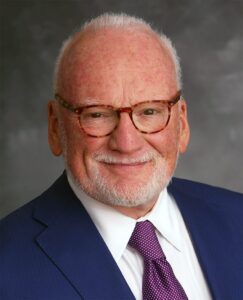 Richard Clarke served for thirty years in national security roles in the US government, including ten years in the White House under three presidents. He is the CEO of Good Harbor Security Risk Management. (richardaclarke.net)