


Tulsi Gabbard is stepping down as the head of US intelligence, the Director of National Intelligence (DNI). But was she ever really the head of US intelligence? And with the DNI job vacant, do we really need to fill it? If not, how can we insure the President receives quality intelligence, warnings do not fall between the cracks, and disputes among intelligence agencies are adjudicated?
Already the CIA, its alumni, and friends on the Hill are pushing to take this opportunity to kill off the DNI structure and return to the days when the CIA Director was also in charge of the entire Intelligence Community. Are they right?
Tulsi We Hardly Knew Ye
When you are supposedly the head of the massive US Intelligence Community (18 agencies, roughly 100,000 staff, slightly more than $100 billion in annual spending), you might think you should be centrally involved in national security deliberations on issues such as invading Venezuela or bombing Iran. Tulsi Gabbard was not. Indeed, she was infamously posting pictures of herself in Hawaii while her colleagues were meeting in the Situation Room on the Venezuela raid.
Her tenure as DNI will be remembered for what she designated as her initiatives, including investigations of who won the 2020 election in the US, where did Covid come from, and whether there were undisclosed files on the Kennedy assassination. The memorable image from her reign may be the photograph of her sulking in the shadows in Georgia (the one in the US) looking at voting machines.
Her most memorable public remarks may be when she told a Senate committee that the IC does not determine if a threat is imminent, the President does. In point of fact, the modern IC was established in 1947, six years after the surprise attack on Pearl Harbor, precisely and primarily to provide warnings of imminent threats. Gabbard may have missed that class at the Farm (as one of CIA’s training centers in known). More than likely, she missed all of them. One thing the IC does not do is teach a new Director of National Intelligence what the job entails or what is the relevant and salient history of the IC and the Office of the DNI. New DNI’s are supposed to know that already. In case you don’t, here is a quick review.
Why is there a Director of National Intelligence?
If you thought the CIA Director was in charge of the US Intelligence Community, you were right, at least until 2005. The modern Intelligence Community’s has its origins in a 1947 law that created the Central Intelligence Agency and the CIA Director, who was to run one agency and coordinate all of them. Then the Office of the National Intelligence Director was established in 2004.
After 9-11, many policy makers, commentators, and members of Congress thought that the failures that allowed the terrorist attack to occur stemmed from structural problems, the way the bureaucratic wiring diagram was drawn. CIA had gone from being theoretically in charge of all US intelligence to just one of seventeen intelligence agencies, primum inter pares perhaps, but not really the boss. Somebody had to insure that no threat and no intelligence fell between the cracks of the agencies, that the various agencies played nicely together sharing information, and that there was overall quality control to insure that the right issues were given priority in collection and analysis.
Thus, was born the Director of National Intelligence. Its job was initially to adjudicate among the various policy and intelligence agencies’ competing requests for intelligence collection (where to point the satellites tomorrow, what communications to intercept and report) and resources (how to divide up the $100 billion). The 9-11 Commission proposed it have a “relatively small staff.” Initially it did, but it was soon given additional jobs and more people.
There were two areas where the CIA and FBI had perennially fought over bureaucratic turf, where they did not readily share what they knew: catching spies (inside CIA and FBI) and catching terrorists (overseas). To insure that the two large intelligence agencies did their job, or that at least somebody did, two new “Centers” were established within the Office of the Director of National Intelligence: the National Counter-Terrorism Center (NCTC) and the National Counter-Intelligence and Security Center (NCSC).
(A personal digression: I thought the National Counter Terrorism Center was going to be a merger of the existing counter-terrorism organizations from the FBI and CIA. The two directors, FBI and CIA, however, found common cause for once by opposing that idea. They did a bureaucratic end run to get President Bush to establish NCTC in addition to the existing CIA Counter-Terrorism Center and its FBI counterpart office.)
As time passed, other “Centers” were created and assigned to the DNI: the Counter Proliferation Center (for weapons of mass destruction threats), the Cyber Threat Integration Center, and the Foreign Malign Influence Center (to detect disinformation created by Russian intelligence and others). Who was in charge of the preparation of the President’s Daily Briefing (PDB), the Top Secret morning newspaper written for the Commander-in-Chief (and top national security officials) became a contentious issue. The DNI became nominally in charge, although CIA provided most of the staff. Both the CIA Director and the new DNI initially attended a morning session with the President for the reading of the PDB (a once regular daily session that has since become irregular).
So large had the ODNI become that it needed its own enormous, Top Secret headquarters, not on the CIA campus, not on the White House grounds in the massive Executive Office Building, but in an office park near the up-scale shopping malls in Tysons Corner, Virginia. Dubbed “Liberty Crossing,” the complex filled up not only with intelligence officers on loan from the existing intelligence agencies, but also with personnel hired by and for the ODNI itself. So-called “Beltway Bandit” consulting firms added hundreds more “butts in seats,” thereby hiding the true number of personnel at DNI from Congressional oversight.
What was to have been a “relatively small” staff, designed to insure the feuding intelligence agencies played nicely together and did not forget anything important, had itself become a competing intelligence agency.
Some national security issues are so important that what may appear as duplication or redundancy is actually competition necessary to insure quality (competition from the small but insightful Intelligence Bureau in the State Department has served to keep the intelligence analysis process more honest for decades), but the DNI had become bloated and somewhat off from its original purpose and intent. Tulsi Gabbard did cut personnel and missions in her eighteen month tenure, but with what appears to have been a Doge-like randomness. Experts who were national assets retired. Morale plummeted. Quality diminished. Important threats were given inattention.
All of which raises the question, is this now a good opportunity to re-think if we need a DNI and a bureaucracy supporting that person? Already the CIA, its alumni, and friends on the Hill are pushing to take this opportunity to kill off the DNI structure and return to the days when the CIA Director was also in charge of the entire Intelligence Community, at least nominally.
A World Without the DNI
If there were no DNI, who would insure the intelligence agencies cooperated? Who would have oversight sufficient to insure intelligence was collected and analyzed sufficiently on important issues to the ultimate consumer, the President? Who would decide how to split up the pie of the secret intelligence budget?
A CIA Director can never be seen within the Intelligence Community as a fair an impartial arbiter. FBI in particular will never bow to its perceived competition and will instead use the Attorney General as its advocate. We might learn something from the British design in which the Prime Minister’s senior coordinator for security and intelligence sits in the Cabinet Office adjacent to 10 Downing Street, with a small staff.
The issues for which we need an independent arbiter and oversight are, however, all missions that could be the role of an Assistant to the President, supported by a highly qualified career staff of no more than one hundred people. An Assistant to the President (Intel) housed on the White House campus (not in a cluster of Virginia shopping malls) could have the clout to perform the needed role, especially if that individual had been chosen with the Advice and Consent of the Senate.
The Assistant to the President (Intel) and their staff could discover and adjudicate disputes, adjust priorities, and perform overall quality assurance across the Intelligence Community. Working with the White House budget office’s national security team, the Assistant to the President (Intel) would control the purse strings, a power that usually results in agencies complying. The National Counter-Proliferation Center could be folded back in to CIA. The Foreign Malign Influence Center could be added to the Intelligence and Research Bureau (INR) of the State Department. Cyber intelligence integration could be performed by a cyber division of Homeland Security (DHS). Counter-terrorism and Counter-intelligence could be functions shared by CIA and FBI. The Assistant to the President’s staff would monitor the work of the devolved parts of ODNI, assuring coordination, cooperation, and quality.
Someone in the National Security Council in the Executive Office of the President having control over intelligence agencies may give some people pause, given the current President. A President could use such control to abuse and misuse the intelligence process, but history has shown that if that is a President’s intent, it will happen wherever the leadership of the Community is house and however it is organized. The intelligence budget is already within the purview of a team within the Executive Office of the President (OMB) and approval and oversight of covert action has always been performed by White House NSC Staff.
In some things, smaller is better, and so it is with the design of a top layer over the Intelligence Community. Size does not matter here, quality and propinquity does. A small, experienced, elite staff with ease of communications with policy decision makers can better do the work of hundreds with less training, access, and empowerment. So let Tulsi be the last DNI. She has, in her own way, proven that the nation does not need one, but it still needs oversight, coordination, and quality assurance of its vast Intelligence Community. All of that can be done better with less.
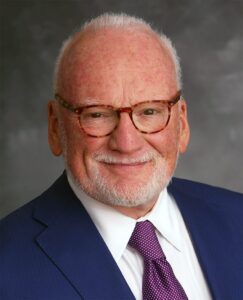 Richard A. Clarke was a Deputy Assistant Secretary of State for Intelligence (Reagan administration) , Special Assistant to the President (Clinton) , and National Coordinator for Security and Counter-terrorism (Clinton/Bush). He is the CEO of Good Harbor Security Risk Management. (richardaclarke.net)