

On January 1, 2020, I launched www.GreatOpeningLines.com, history’s first website devoted exclusively to the celebration of great opening lines in world literature. After a modest beginning, it is now the world’s largest online database of literary openers, with well over 2,000 entries. If you’re a writer or aspiring writer, an avid reader, or simply a First Words junkie, consider it your “Go-To” site on the subject.
When the site was launched, I commemorated the event by doing a Smerconish.com post on “Twenty of the Best Opening Lines of 2020”. Since then, I’ve followed up with similar end-of-year lists for 2021, 2022, 2023, and 2024. This marks my sixth annual compilation.
It is a truism in the literary world that the purpose of a book’s opening words is to keep the reader reading. In a 2015 blog post, the crime-fiction writer P. J. Parrish nicely expanded on the idea:
“The importance of a great opening goes beyond
its ability to keep the reader just turning the pages.
A great opening is a book’s soul in miniature.
Within those first few paragraphs—sometimes buried,
sometimes artfully disguised, sometimes signposted—
are all the seeds of theme, style and most powerfully,
the very voice of the writer….”
An exceptional opener has other purposes as well, as writer Chuck Wendig suggested in a 2012 article in The Ramble:
“A great first line is the collateral that grants the
author a line of intellectual credit from the reader.
The reader unconsciously commits:
‘That line was so damn good, I’m in for the next 50 pages.’”
And in a 2013 interview with Joe Fassler of The Atlantic magazine, Stephen King offered perhaps the best thing ever said on the subject:
“An opening line should invite
the reader to begin the story.
It should say: Listen. Come in here.
You want to know more about this.
How can a writer extend an appealing invitation—
one that’s difficult, even, to refuse?”
Appealing openings can take many different forms, as you will shortly see. I found all of this year’s selections—thirteen from the world of fiction and twelve from non-fiction—not merely difficult to refuse, but almost impossible. Perhaps they’ll have that same effect on you.
(1) FREDRIK BACKMAN
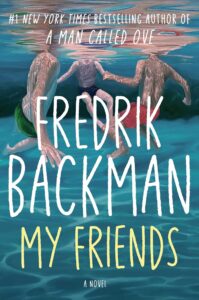
Louisa is a teenager, the best kind of human.
In a 2025 Writer’s Digest article, writing teacher Jacqueline Faber flatly asserted: “The writer’s first mandate is to nail the opening,” and Backman does exactly that here. In nine disarmingly simple words, he flips the familiar cultural script that portrays teenagers as difficult, challenging, or problematical. My first thought after reading Backman’s first sentence came quickly: This has all the earmarks of a classic opening line.
(2) DAVID BALDACCI
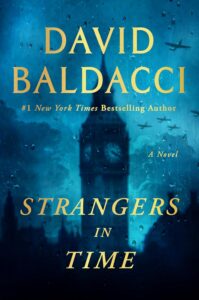
It was well past the midway point of 1944 when Charlie Matters clambered over the piled-up debris that littered much of London, while doing his best to fade into the lingering edges of the night-time.
From the outset, we’re dropped into a bomb-scarred London at a precise historical moment—and our attention is tightly focused on a single frightened boy navigating the wreckage. Written by a consummately skilled writer, the first sentence perfectly balances atmosphere, action, and character—and the quality of the prose continues as the narrator continues:
“Charlie would be fourteen on his next birthday, and years had passed since his parents had been alive. Eighteen thousand souls had died violently in the eight months of the Blitz alone, and one in six Londoners had been left homeless at one time or another. Sometimes there seemed to be more fallen buildings than ones left standing. A person could easily become desensitized to such profound loss. Yet while the war years had tried their best to rob him of it, Charlie was still resolutely in possession of a heart.”
(3) MAIWAND BANAYEE
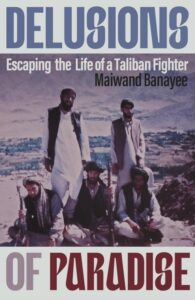
When I was 16, I wanted to become a suicide bomber for the Taliban in Afghanistan.
Delusions of Paradise: Escaping the Life of a Taliban Fighter (2025)
This opener is striking not because it tries to shock, but because it’s the disarmingly candid truth about the author’s life—and all expressed in the matter-of-fact way an America teen might say, “At 16, I wanted to become an astronaut.”
Born in in Kabul, Afghanistan in 1980, Banayee grew up in a world filled with turmoil and violence. At age twelve, he and his family escaped to a refugee camp in Pakistan. At fourteen, he enrolled in the camp’s madrasa, where he was indoctrinated by Islamic militants to die in jihad.
In a review in London’s The Telegraph, writer Frances Wilson wrote: “This must be the strongest opening sentence of any memoir of the 21st century, and the following 300 pages do not disappoint.”
(4) JENNIFER FINNEY BOYLAN
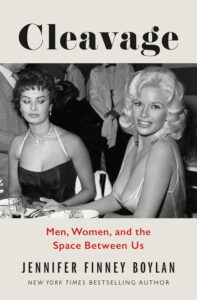
I was born in 1958, on June 22nd, the second day of summer. It was also the birthday of Kris Kristofferson and Meryl Streep, both of whom I later resembled, although not at the same time.
Cleavage: Men, Women, and the Space Between Us (2025)
Can the opening words of a memoir be so spectacular that the author finds a way to re-cycle them more than two decades later? The answer is a definite yes, as Boylan proves in her fifth—yes, her fifth—memoir. The meaning of her slyly playful opening words becomes clear in the book’s second paragraph:
“I began the story of my life with these words in She’s Not There: A Life in Two Genders, a memoir published in 2003. At the time it seemed reasonable enough, beginning with the beginning.”
(5) WILLIAM BOYLE

Risa’s in the kitchen, crying into a gravy-stained dish towel as she heats up the remaining chicken cutlets on the stove in her cast-iron pan. Her hands are clammy. Sweat beads her hairline. Her purple T-shirt has dusty little circles on it from the popping oil.
Saint of the Narrows Street (2025)
Boyle is one of America’s finest novelists, and this opener is like a Great Opening Lines masterclass. From the outset, readers are immersed in a gritty, meticulously detailed scene that feels familiar rather than literary. The heat, grease, sweat, and cramped kitchen combine to make readers sense Risa’s emotional distress before it’s ever explained. In a blurb for the novel, writer Eli Cranor wrote:
“Nobody writes like William Boyle. Every character has a huge thumping heart. You can smell the skeevy bars and taste the homemade lasagna. Boyle deals in details, but this is a big, epic novel, and it’s his best yet.”
(6) H. D. CARLTON

This will be the third man I’ve whacked today, and I’ve run out of patience for their useless begging.
The word whacked in the opening line immediately suggests a “hit man,” and that suggestion is further reinforced in the second paragraph, where the narrator continues:
“Typically, I leave this job to the enforcers in the Salvatore family, but ending a man’s life offered a release unlike any other vice. Cigarettes, whiskey, birds—none of them have the same effect.”
As we read on, though, we discover we’re wrong. It is not a hit man speaking to us, but a hit woman. And not only a woman, but a wife, a mom, a reader, and a writer. Carlton uses the opening misdirection to brilliantly challenge our assumptions about who gets to inhabit key roles in human life.
(7) MELISSA FEBOS
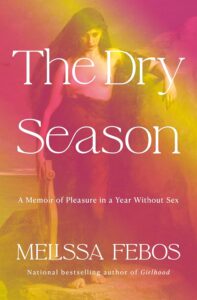
It is raining. Drops spatter against the plane’s windows as we descend through the clouds and prepare for landing. The woman is seated four rows behind me, but I spotted her before we boarded: tousled hair in a wool beanie, leather boots belonging to the category worn only by lesbians and Dickensian orphans, giant backpack. I felt myself begin to glow with a chemistry visible only to the object of my attention.
The Dry Season: A Memoir of Pleasure in a Year without Sex (2025)
It is commonly said that a great opener is an act of seduction, and this one had me at I felt myself begin to glow. Even though The Dry Season is a memoir, these opening words felt like a masterful piece of micro-fiction. Febos continued in the opening paragraph:
“I do not understand the biological protocol that enacts once it is triggered, but I do know that more often than not, the end result is sex, and if my past is any indication, some sort of romantic entanglement.”
About the book, writer Maggie Nelson wrote: “Reading The Dry Season is like having a nourishing conversation with a smart, wry, and ever-probing friend—a conversation so full of wisdom and pleasure that you don’t want it to end.”
(8) JAMES FREY
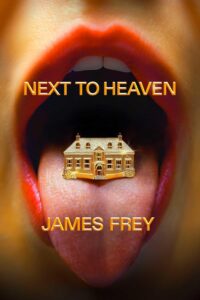
Devon often dreamed of punching her husband in the face. She didn’t necessarily want to hurt him. And he often didn’t do anything to deserve it. She was just tired of him.
In any piece of fiction, the ability to describe disgust without slipping into melodrama is a considerable challenge, but Frey does it here with raw, unflinching precision. As the first paragraph unfolds, the narrator provides an inventory of minor grievances that moves Devon’s emotional needle from simmering to seething:
“Of his voice, of his smell, the way he breathed, how he chewed, the way he sniffed, the way it sounded when he swallowed, that he picked his fingernails and sometimes dropped them on the bathroom floor instead of the trash can, that he both snored and farted while he slept. None of it was done to deliberately annoy her, and he didn’t know that any of it did. It didn’t matter. She wanted to punch him. Right in his rotten fucking face.”
(9) JASON GAY
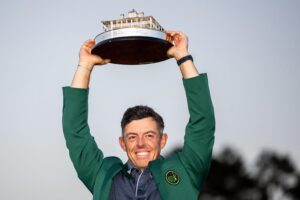
It was like watching a beloved but untrustworthy old truck, 270,000 miles on the odometer, tank near empty, bed rusted, bumper hanging, tires balding, snorting smoke, sputtering oil, conking out five times on the way home—somehow rumbling up the driveway and safely wheezing its way into the garage. In other words: beautiful.
“Rory McIlroy’s Messy Masterpiece at Augusta,” in The Wall Street Journal (April 14, 2025)
In newspapers and magazines, great opening lines are called ledes, and this was my choice as the best of the year. In one exuberant, careening sentence, Gay provided an eloquent encapsulation of how the aging McIlroy stumbled home to victory in the 2025 Master’s tournament. His opener was not simply a metaphorical tour de force, it was also a refreshing reminder that championships in sport are won through endurance and sheer survival as often as they are through spectacular play.
(10) THOMAS GIBBONS-NEFF
Christmas was a few days away and Solomon Lehnerd was selling more grenade launchers than usual.
In the world of opening lines, a common ploy is to merge two wildly incompatible ideas—and few pairings clash more sharply than Christmas cheer and grenade launchers. In this instance, the jarring juxtaposition snaps the reader to attention, signaling a story in which American gun culture and holiday consumerism blend in an unsettling way. Gibbons-Neff continued in the same vein in the following paragraph:
“It was the first holiday season that his online gun store was selling the components to assemble the holy grail of enhancements for AR-15-style rifles: a 40-millimeter grenade launcher that mounts to the rifle.”
(11) TODD GODDARD
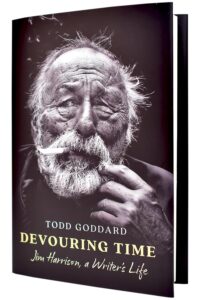
On a cool, misty morning in November 2003, a hungry Jim Harrison paced the gardens of a manor house in the medieval village of Saint–Père–sous–Vézelay in Burgundy, anticipating the beginning of a thirty-seven-course lunch.
Devouring Time: Jim Harrison, A Writer’s Life (2025)
This opener isn’t particularly memorable until the very end—when it becomes unforgettable. The number of courses isn’t an exaggeration, either, but rather a precisely accurate description of a now-famous 2003 meal prepared by elite French chefs working from seventeen historical cookbooks published between 1654 and 1823. Harrison, one of a dozen invited guests, later memorialized the experience in his 2004 New Yorker essay, “A Really Big Lunch.”
(12) GEORGI GOSPODINOV
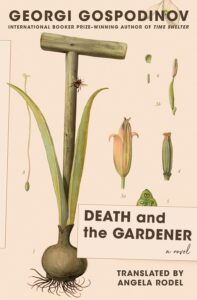
My father was a gardener. Now he’s a garden.
In two spare and startling sentences, these opening words capture an entire universe of grief. Spoken by an unnamed narrator reflecting on the recent death of his father, the words might seem whimsical or lighthearted at first glance, but their effect is anything but. As I see it, imagining a passionate gardener ultimately transformed into the very thing he tended his entire life is a perfect way for a loving son to find meaning in his father’s death. I recall one anonymous reader saying, “The opening is an argument to read this novel,” and that sentiment strikes me as exactly right.
(13) SARA HARMAN
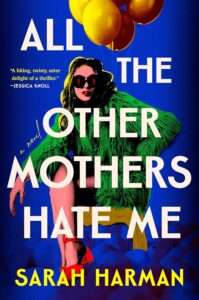
The missing boy is ten-year-old Alfie Risby, and to be perfectly honest with you, he’s a little shit.
All the Other Mothers Hate Me (2025)
This is a bold and striking opener, irreverently flouting the social convention that people shouldn’t speak ill of victims of foul play. Instead of the hushed sense of worry we typically see in a missing child novel, the narrator—who we will shortly learn is the mother of another child in the missing boy’s class—immediately draws readers in with a remark that is so candid it borders on shocking. In the novel’s second paragraph, she continued:
“I realize that’s a horrible thing to say about a child, particularly one who is missing. But—and I’m not proud of this—if I had to choose a boy in Dylan’s class to vanish in broad daylight, Alfie would have been at the top of my list.”
(14) WALTER ISAACSON

“We hold these truths to be sacred…”
Sacred? No. That doesn’t sound right.
But that’s how Thomas Jefferson wrote it in the first draft.
The Greatest Sentence Ever Written (2025)
Isaacson’s opening words take us directly into the minds of the Founding Fathers—Thomas Jefferson and Benjamin Franklin, in particular—and quietly puncture the myth that the most revered sentence in American history arrived fully formed, like revelation.
On the contrary, Isaacson shows that the legendary sentence beginning We hold these truths to be self-evident was the result of qualities we typically associate with painstaking literary craftsmanship: a first draft willingly shared, words argued over without rancor, individual egos set aside in pursuit of the common good, and, most important, a willingness to make needed changes. According to Isaacson, the greatness of the sentence lies not only in what it declares, but in the remarkable collaborative efforts it took to get there.
(15) PAM JENOFF
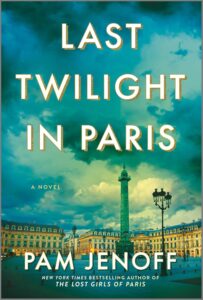
Paris, 1943
Darkness.
Helaine stumbled forward, unable to see through the black void that surrounded her. She could feel the shoulders of the others jostling on either side. The smell of unwashed bodies rose, mingling with Helaine’s own. Her hand brushed against a rough wall, scraping her knuckles. Someone ahead tripped and yelped.
For any historical novel, it’s a challenge to know where to begin, but when the story involves the Holocaust, there are special challenges. In her opening words, Jenoff rises to the occasion by describing a woman stumbling forward in a pitch-black environment packed tightly together with other foul-smelling human beings. The stark depiction of a darkened railway car packed with Jews ripped from their homes and being transported to an unknown destination is a clear indication that Jenoff will not ease readers into this dark and disturbing world, but plunge them directly into it.
(16) DAVID LEVITHAN

Let’s start at the urinal.
Songs for Other People’s Weddings (2025)
In the world of opening lines, this is a classic hook—bold, unexpected, and impossible to ignore. And once readers have taken the bait, Levithan wastes no time reeling them in with an informative and entertaining second paragraph:
“Two men are standing unnaturally close to one another, which would ordinarily be a significant breach of urinary etiquette, especially when the dividers are as ineffective as they are here. But in this instance, the breach is entirely pardonable, because these two men, Jun and Arthur, have just gotten married.”
Things then take a whimsical turn as the narrator continues:
“Also, they are wearing a gigantic tuxedo that’s been tailored for two people to share. The white shirts underneath are sewn together with a big bowtie on the top. The pants are appropriate for both a formal occasion and a three-legged race. The fly has been inconveniently placed.”
(17) FRIEDA MCFADDEN
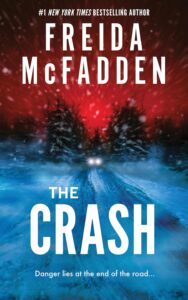
I’ve never killed anyone before.
McFadden is one of the modern era’s most popular novelists, and few writers excel her in crafting great opening lines. She does it again in The Crash, where the calm, conversational tone of the narrator’s voice clashes with the enormity of the crime of murder. The word before is a key element, suggesting a boundary about to be crossed—and leaving readers highly curious about what is about to transpire. In the second paragraph, the narrator continued:
“I’m not a murderer. I’m a good person. I don’t lie, I don’t cheat. I don’t steal. I hardly even raise my voice. There are very few things I’ve done in my life that I’m ashamed of. Yet here I am.”
(18) LEILA MOTTLEY
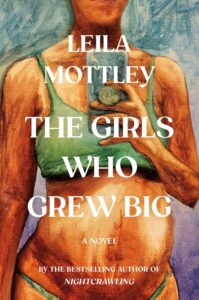
Nobody ever warns you about the placenta.
This opener explodes off the page, ending with a word so unexpected and earthy that it’s impossible not to read on. The speaker, we soon learn, is a 20-year-old girl named Simone, who’s given birth in the bed of her boyfriend’s pickup truck. In the first paragraph, she continued:
“Like, you spend days seizing and stretching open to get some shoulders out your coochie and then the baby, or babies in my case, are writhing in your arms, and you realize it’s not even over. You still gotta push out this pulsing purple heart bigger than your man’s head—and my man had a big-ass head—and find a way to cut the cords.”
In the New York Times Book Review, writer Nina LaCour wrote about the novel: “Mottley has brought the physicality and pain and beauty of birth and new motherhood into the light. That she has done so by way of teenage girls who have too often been shamed and shunned and told to hide themselves away makes her novel all the more vital to behold.”
(19) AMANDA NGUYEN
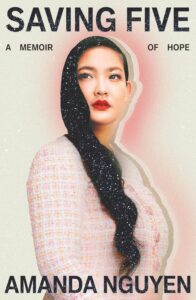
Harvard, 2023—My Ten-Year Reunion
I go back to the place I was raped. It’s been ten years—a decade of life, and a world away from the person I was then. And yet, I feel her. Her pain. Her loneliness. Her despair. Her powerful rage.
Saving Five: A Memoir of Hope (2025)
From the opening words, we know we’ve begun the memoir of a rape survivor. What we don’t know yet, though, is if the work will be sufficiently well-written to hold our interest. That question is answered—conclusively—when we’re swept away by the metaphorical gem that is the book’s second paragraph:
“Scientific studies on memory explain the peculiar impact that trauma can have on the brain. Out there in the world, your body is attacked—and inside your head, a hormone called norepinephrine is released, spawning an emotionally charged reaction: the violent birth of a memory. For years, perhaps, or even for the rest of your life, your brain can keep that memory loaded in the chamber, slick with adrenaline, ready to fire away with the tug of a trigger.”
By the way, Nguyen pronounces her last name as Win, and if her name sounds familiar, it’s because she was the driving force behind the Sexual Assault Survivors’ Bill of Rights Act, signed into law by President Barack Obama in 2016.
(20) MARY ROACH

Tycho Brahe’s nose came off in 1566.
Replaceable You: Adventures in Human Anatomy (2025)
Roach—a true master of the great opening line—begins her latest book with a strange and startling historical fact delivered almost as a casual aside. The opening sentence’s power comes from that contrast: something verging on the grotesque but stated so simply it almost dares the reader not to keep reading. It’s also a perfect way for Roach to begin her exploration of the long, often bizarre history of medical efforts to deal with failing, ailing, or inadequate body parts.
(21) CHARLIE SHEEN

On September 3, 1965, in New York City, at 10:58 p.m., I was born dead.
When I learned earlier this year that Sheen was coming out with a memoir, I said to a friend, “I predict it will have a memorable opening line.” Turns out, I was right. Given his over-the-top persona, though, the last thing I expected was an arresting example of understatement. In the book’s second paragraph, Sheen returned to his more typical manner of discourse:
“We’re talking toe-tag, meat-wagon, fukken dead. The delivering doctor had already sprung into code blue-baby, umbilical-strangulation 1960s ass-whoop action.”
(22) TATIANA SCHLOSSBERG
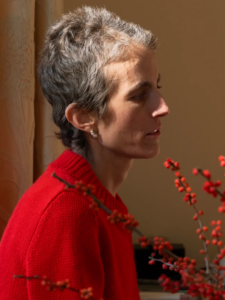
When you are dying, at least in my limited experience, you start remembering everything.
“A Battle with My Blood,” in The New Yorker (Nov. 22, 2025)
Schlossberg is a well-known Kennedy-clan member struggling with a life-threatening blood disorder called aplastic anemia. Here, she begins her story by matter-of-factly—and memorably—describing one fascinating aspect of her life-threatening medical condition. The phrase in my limited experience makes her opening sentence feel intimate rather than dramatic, and what follows is a flood of vivid, oddly ordinary memories:
“Images come in flashes—people and places and stray conversations—and refuse to stop. I see my best friend from elementary school as we make a mud pie in her back yard, top it with candles and a tiny American flag, and watch, in panic, as the flag catches fire. I see my college boyfriend, wearing boat shoes a few days after a record-breaking snowstorm, slipping and falling into a slush puddle. I want to break up with him, so I laugh until I can’t breathe.”
(23) CHRIS WHIPPLE

Joe Biden looked like a dead man walking.
Uncharted: How Trump Beat Biden, Harris, and the Odds in the Wildest Campaign in History (2025)
It’s risky to open any book with a well-worn idiom like dead man walking, but given the unforgettable moment we all witnessed in CNN’s 2024 Presidential Debate, it acquires a fresh, arresting quality in Whipple’s examination of one of the most unpredictable presidential campaigns in American history. No matter how you lean politically, after an opening line like this, I’m sure of one thing: you’re going to read on.
(24) REESE WITHERSPOON & HARLAN COBEN
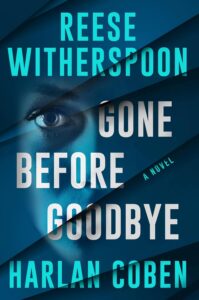
I don’t hear the scream.
I don’t expect much when I approach novels written or co-written by celebrity authors, so I was pleasantly surprised by this arresting—and sophisticated—first sentence. What makes the opener special is that it signals danger through absence rather than action, using silence as the hook. The words come from Maggie McCabe, a renowned Army combat surgeon, who quickly begins to fill out the picture:
“The nurse does. So does the anesthesiologist. I am too deep in the zone, the zone I can only enter in an operating theater, when a sternum is cracked open like this, and my hands are inside the boy’s chest. This is my home, my office, my sanctuary. I am Zen here.”
(25) EVIE WYLD
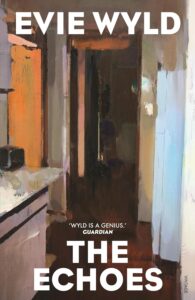
I do not believe in ghosts, which, since my death, has become something of a problem.
In this single opening sentence, Wyld delivers both an irresistible premise and a wryly perplexed character. While alive, the narrator—a young Australian man named Max—dismissed the idea of ghosts as a foolish fantasy. Now dead, he not only discovers that ghosts exist, but that he has become one. In a Book Riot review, contributing editor Kendra Winchester also spoke for me when she wrote, “From the first line, I was hooked.”
As I pointed out in my previous end-of-year posts, I don’t regard the selections above as the best opening lines of 2025, but rather as twenty-five of the very best. My selections reflect my tastes and preferences, and a similar list created by you would almost certainly be considerably different. In making my selections, I’ve read the opening words of close to five thousand books, which means if I’d been able to examine more, some of the this year’s selections would’ve likely been replaced by even better ones.
If you failed to find your favorite opening lines from 2025 in this post, there’s a good chance you might find them at www.GreatOpeningLines.com. And if you cannot find them there, please e-mail them to me at [email protected]. If I concur with your assessment, I’ll make sure they get posted on the site.
See you next year.
Mardy
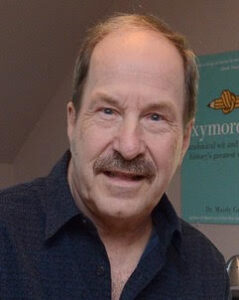
Dr. Mardy Grothe is a retired psychologist and author of eight quotation anthologies, including Oxymoronica and I Never Metaphor I Didn’t Like (for more, go to: www.drmardy.com). The compiler of “Dr. Mardy’s Dictionary of Metaphorical Quotations” (DMDMQ), he also publishes a weekly newsletter on Substack (drmardygrothe.substack.com).